
My approach to rear suspension on a FWD car has always been pretty basic. Add lots of roll stiffness, mostly with a rear swaybar. Shocks that aren't floppy. Tire pressure that keeps the sidewalls from scrubbing. That's about it. Camber settings can help even out rear tire wear, and maybe optimize contact patch... but, honestly, I've never worried about it. All the magic happens at the front of the car. (besides, there is no rear camber adjustment on this car) Rear toe out can be interesting to play with on a FWD car to help the car turn. But, that's not the problem we're dealing with today. (and there is no rear toe adjustment on this car)
The problem: When the suspension is fully loaded under acceleration, the inside front wheel hops. It's annoying, it's not effectively putting down power, and I'm afraid it's going to break the car.
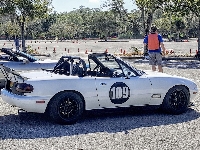
Here's a photo, that is interesting:

It's probably not "full tilt", but it's a pretty hard transition that would have a lot of FWD cars lifting a rear wheel. Note that it is not doing that.
So far, I've set the front shocks as soft as they will go. And that helped a lot. The rear shocks are presently set near soft, as well. (I don't usually go for a big disparity in front/rear shock settings)
What I'm thinking is... lateral weight transfer. And, maybe going stiffer (a lot stiffer) with the rear shocks could help.
Why?
1. Slowing the rebound of the inside rear tire will make that tire lift more readily, which transfers more weight to the front. (mostly to the outside front, but some of that will be distributed to the inside front where it is needed)
2. Controlling the movement of the outside rear tire might prevent some of the "rocking" action that is probably happening when the outside front starts to wheel hop. Maybe it will help keep that wheel planted?
That's my thought for the moment. I won't get a chance to test the theory until the next Open event.
Anybody got any additional ideas?