Okay, okay... brake pads.
1. They might be fine. We live in FL. We get lots of wet days. If your rotors get more than a couple days of rust on them, you need to scrub that rust off (by braking) and then re-bed your pads just as you would new ones. In other words: The first thing to try is a good ol' Italian Tune Up. Get the brakes good and hot. Hot enough that you just start to smell them. Then let them cool evenly (generally by driving with minimal braking for a while), and rest overnight. This transfers some pad material to the rotor and gets your brakes working as intended.
2. I know nothing of your particular pads, but if they are designed for higher temperatures, they may not be up to operating temp at lower temperatures. Street pads operate well when cold, and have reasonable heat-tolerance for maybe 1-2 SERIOUS stops (like 70-20 a couple times). Because of that, they don't squeal when cold (if properly bedded), and they work as you expect them to. The more the heat range of a pad is slanted toward track use, the higher temps it can tolerate (lots of repeated fast stops with no pad fade), and the less they're going to work when they're cold.
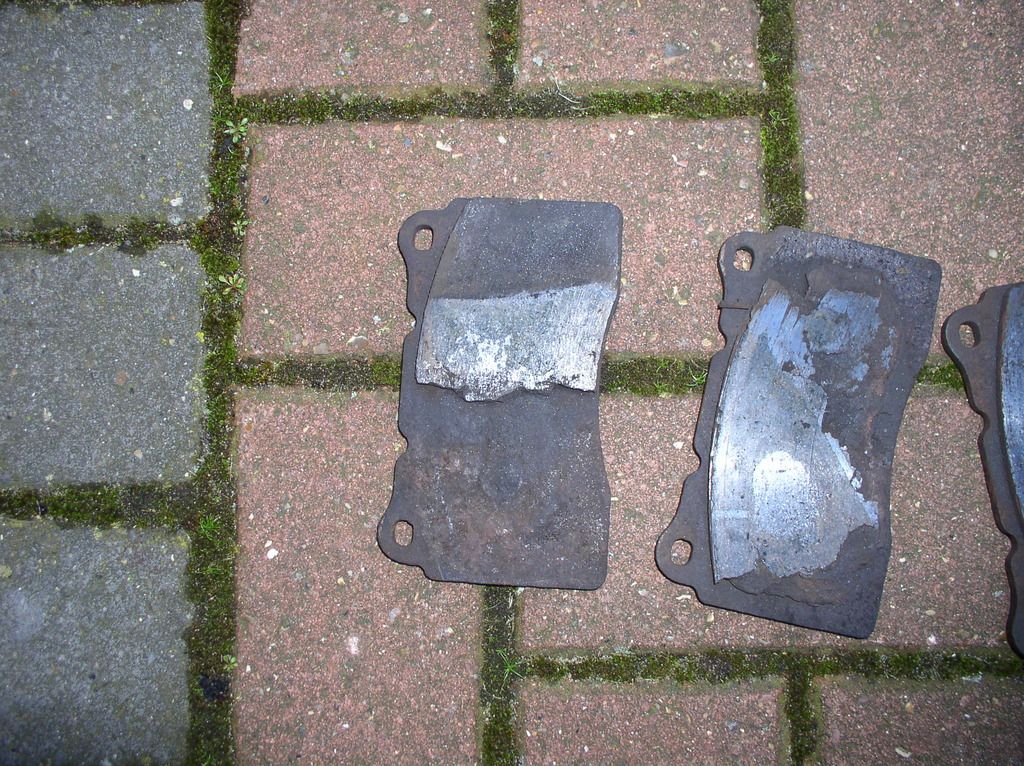
3. Brake pads work in one of two ways: Abrasive (killing your rotors) or Ablative (sacrificing the pad material). By design, the system should be ablative. You bed the pads to transfer some pad material to the rotor, and under normal use, pad material adheres to pad material, gives you good pedal feel ("bite") and most of the wear is to the pad rather than the rotor. A more aggressive pad that works in a higher heat range won't be up to operating temp until sometime after the first brake application. That can be anything as subtle as "these pads squeal on the very first application when they're cold" to "these pads just plain don't get up to operating temp on the street, and ALWAYS squeal". Here's the deal... with an overly aggressive pad, that squeal is the brake pad operating in ABRASIVE mode, eating up your rotor. Try it with race pads after dark sometime. You can SEE the sparks flying off of your brake rotor.
Most of this info comes from a combination of personal experience and
THIS ARTICLE, which is a very good read.


 . Only would want to replace if it's a worthwhile upgrade, especially since I still have original brake lines with lots of miles. Also my wife commented on how her car(nissan sentra) has a better initial brake bite feeling over my which sadly is true...